Start by choosing the shape of the meal: a khao soi noodle bowl, or sticky rice with a few shared dishes. You do not need to order both formats at once to try Northern Thai food. Check what the kitchen serves, ask about its smallest portions, and leave room to decide on additions after the first food arrives.
This guide uses four familiar starting points: khao soi, nam prik ong, sai ua and sticky rice. The shared-meal suggestion is an editorial way to start small, not a fixed traditional set or a promise that certain quantities will feed two people. Prices, portions and ingredients must come from the restaurant you choose.
Information checked on 9 October 2026, Thailand time. The Chiang Mai University and Tourism Authority of Thailand sources below document dishes and food culture, not current menus at individual restaurants. This is a researched ordering guide, not a firsthand tasting review.
Choose one starting format
Choose the noodle-bowl route if you want to begin with one named main dish rather than assemble several plates. Ask how large the bowl is and what the selected version contains. Its size might leave you wanting more or make extra dishes unnecessary.
Choose the shared-dishes route if you want to compare a dip, vegetables and sausage with rice, and the menu offers them. Before ordering, check the portions and what comes together. A bowl of dip, a plate of vegetables and rice might be separate selections, or some items might come together; settle that from the actual menu.
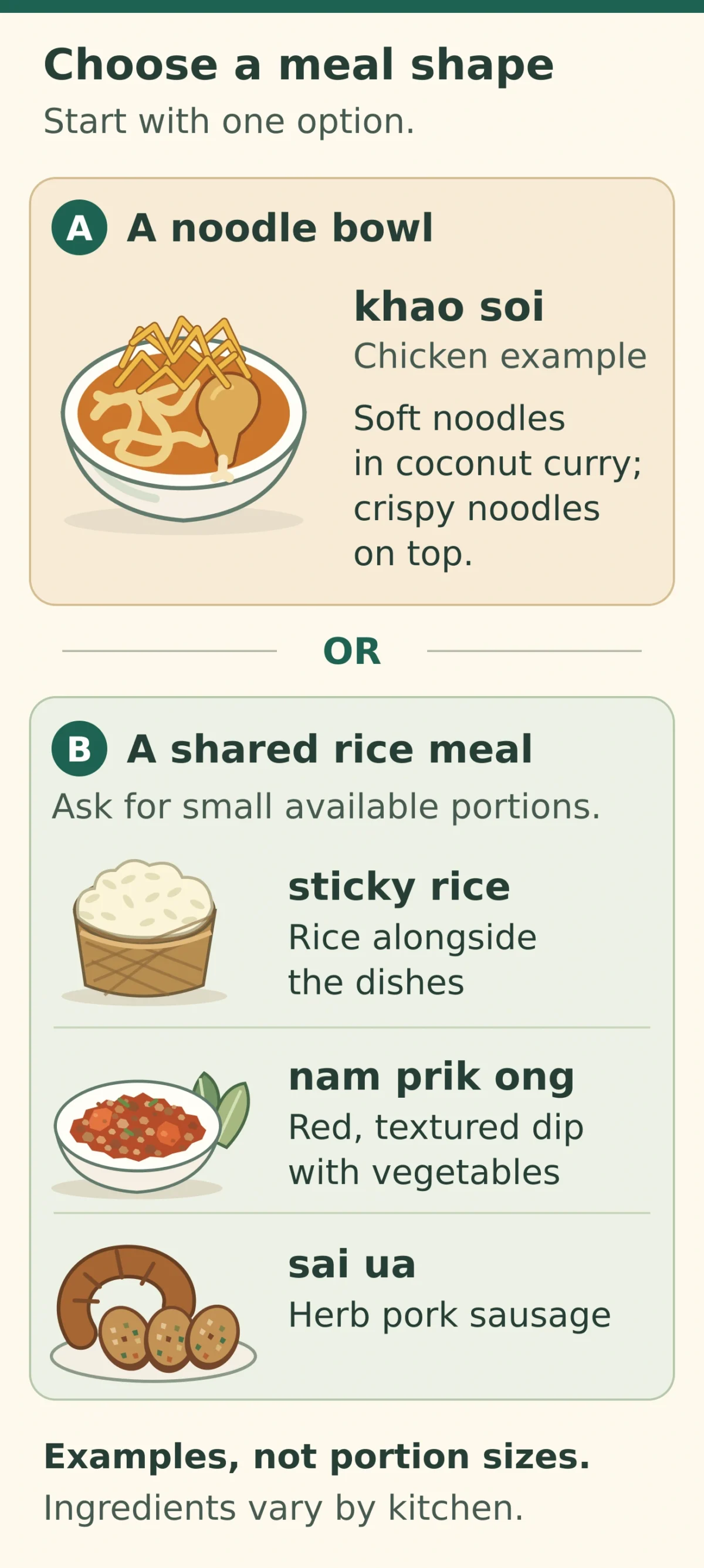
For two people, discuss whether both want the same format before ordering. If one person chooses a noodle bowl and the other wants shared dishes, avoid silently counting the bowl eater as a full share of every plate. You can still combine choices, but ask for amounts that fit what each person actually intends to eat.
Recognise the few dishes that shape the order
Khao soi is the noodle-bowl option
The CMU khao soi kai record describes a chicken version with yellow noodles, coconut milk and curry paste, with both boiled and fried noodles. TAT's Northern Thai food overview also describes the soft noodles and crisp topping in a coconut-curry broth. This is the style illustrated here; the name alone should not be treated as a complete recipe for every regional version.
For this meal decision, the useful question is whether to start with a bowl on its own. Confirm the selected meat and the rest of the ingredients with the kitchen. The CMU example includes shrimp paste in its curry mixture, so the named meat does not describe everything in the dish. Detailed condiment steps are outside this guide's shared-meal focus.
Nam prik ong is a dip to plan with its accompaniments
CMU's nam prik ong record describes a reddish chilli-and-tomato dip served with vegetables. Its documented version contains minced pork and shrimp paste. A tomato colour is therefore not enough to identify all its ingredients.
Ask which vegetables come with the dip and whether they are included in the listed portion and price. If vegetables are separate, choose that amount deliberately. Do not order an extra vegetable plate merely because a photograph shows one beside the dip.
Sai ua is the sausage choice
CMU's sai ua record documents a pork sausage with chilli and ingredients such as lemongrass, galangal and makrut lime leaves. Its recipe also includes shrimp paste. These are useful questions for the kitchen, not a universal ingredient checklist.
Look at the menu's selling unit before deciding how much to order. Ask whether the amount is a plate, a specified weight or another unit, and what the smallest available order is. A picture of a whole coil does not establish how much you will receive or need.
Sticky rice connects the shared dishes
TAT's Thai-language Northern food guide describes sticky rice alongside dishes including northern dips. For this proposed meal, treat the rice as a separate quantity to confirm rather than assuming it comes with every plate.
Ask whether rice is included, how it is served, and whether the smallest serving can be shared. A basket in a menu photo does not specify a weight or how many people it will satisfy.
Build a small first order without doubling the food
If two people want the shared-meal route, discuss one small nam prik ong serving with its confirmed accompaniments, a small sai ua order, and the amount of sticky rice you want. This is a starting proposal to discuss with staff. It is not a menu item, a fixed price or a tested two-person portion.
Three checks help avoid an unexpectedly large order:
- See what is already included. If the dip comes with vegetables, decide whether you still want another vegetable dish. If rice comes with a set, check before ordering more.
- Check the unit, not just the dish count. One sausage order or one rice container can mean different amounts. Ask to see the available portion or have the staff describe it.
- Agree on additions after the first order. Tell staff you would like to start with these items and consider more later. Confirm whether that is workable before relying on another round of ordering.
Choose the smaller confirmed option if you are uncertain and the kitchen offers one. Seeing what arrives gives you a better basis for adding food than turning every interesting menu picture into another dish. No universal portion rule can account for your appetite or that kitchen's serving size.
Use this short order check
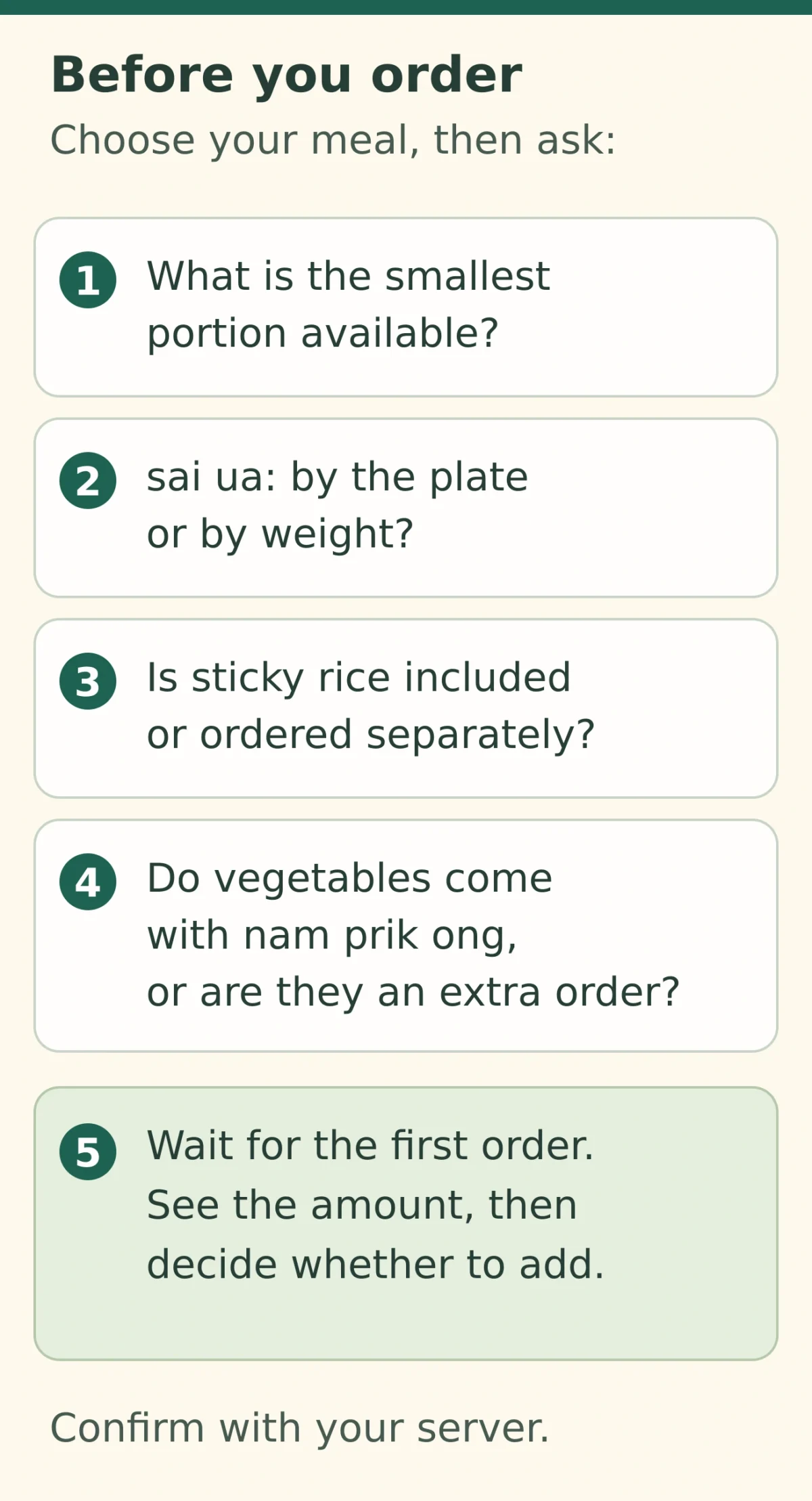
These English questions can help organise the conversation. Point to the exact menu item so the answer refers to the dish you intend to order:
- What is the smallest portion of this dish?
- What comes with it? Are the vegetables and sticky rice included or separate?
- How is this sausage priced and served?
- What ingredients are in this version, including its paste or sauce?
- Can we start with these and order more later?
Recipe examples and pictures cannot confirm suitability for an allergy, a dietary restriction or a religious requirement. If you need an ingredient excluded, explain that requirement and resolve it with the kitchen before ordering; do not infer an answer from the dish's name or appearance. For halal-specific verification, use the guide to checking a restaurant's halal claim.
Finish the order by confirming the selected items, their amounts, inclusions and total price. Then enjoy the food you chose before deciding whether the table needs anything else.