Source check: 10 October 2026. This English companion to our Japanese tea-ordering guide uses current menu examples, not a firsthand tasting review.
Choose the exact drink on the menu before asking for less sweetness or less ice. Then confirm milk, sweetness, serving style and price as separate details. That gives the person taking your order one clear starting point, rather than a list of changes to an unnamed drink.
Start with the printed name
ChaTraMue’s official Original Menu lists Thai Tea, Milk Green Tea, Thai Black Tea, Thai Lemon Tea, O’Lieng and Thai Coffee as separate entries. Use those names to locate an option; the list does not provide a complete ingredient statement or prove that every branch serves every item. See the official Original Menu.
If you want lemon tea, first look for that named drink. If you want a milk-style drink, point to the option you mean and ask which milk or other ingredients it contains. Choosing a listed drink is a clearer starting point than ordering one product and trying to rebuild it into another.
Avoid relying on colour. A photograph may help you find the item, but it cannot answer questions about milk, sweeteners or the preparation of your actual order. Likewise, “black” in a name does not by itself confirm that a drink is unsweetened.
Tea latte or coffee latte?
The word “latte” alone may leave your order unclear. ChaTraMue’s separate Latte Menu includes Thai Tea Latte, Black Tea Latte, Matcha Latte and Coffee Latte. Its Coffee Menu also lists Latte, Americano and other coffee drinks. Compare the Latte Menu and Coffee Menu.
Say or point to the full name. If you want tea, keep the tea name attached to “latte.” If you want coffee, choose a coffee entry and confirm its preparation. These examples explain how to read this vendor’s menu; they are not definitions of recipes at every café in Thailand.
Keep four decisions separate
1. Milk and other ingredients
Ask what goes into the selected drink. If you want an ingredient left out or replaced, ask whether that is possible for this item before paying. Do not assume a name without “milk” gives you a complete ingredient list.
If an ingredient restriction matters for your safety, get clear information from the vendor rather than treating this ordering card as a safety check. The card does not verify ingredients, preparation areas or shared equipment.
2. Sweetness
Ask, “Can you make this less sweet?” If there is a sweetness scale, use the choices that shop offers and ask what your selection changes. Do not translate a percentage into grams of sugar or assume that the same percentage means the same thing at another shop.
“No extra sugar” is a request about an addition. It does not establish the contents of every ingredient already in the drink. If you need more than a taste preference, ask for the actual ingredient or nutrition information available for that product.
3. Ice and serving style
Confirm whether you are ordering a hot, iced or blended version, using the options on the menu in front of you. Ask about less ice separately from less sweetness. If drink quantity matters, ask what happens to the serving when ice is reduced; do not assume the cup will receive extra liquid.
4. Size and total
Point to the size you want. Before paying, confirm the total with any changes, toppings or substitutions. This guide does not quote a nationwide price or promise that customisation is free.
A short English order card
Show the menu while using one prompt at a time:
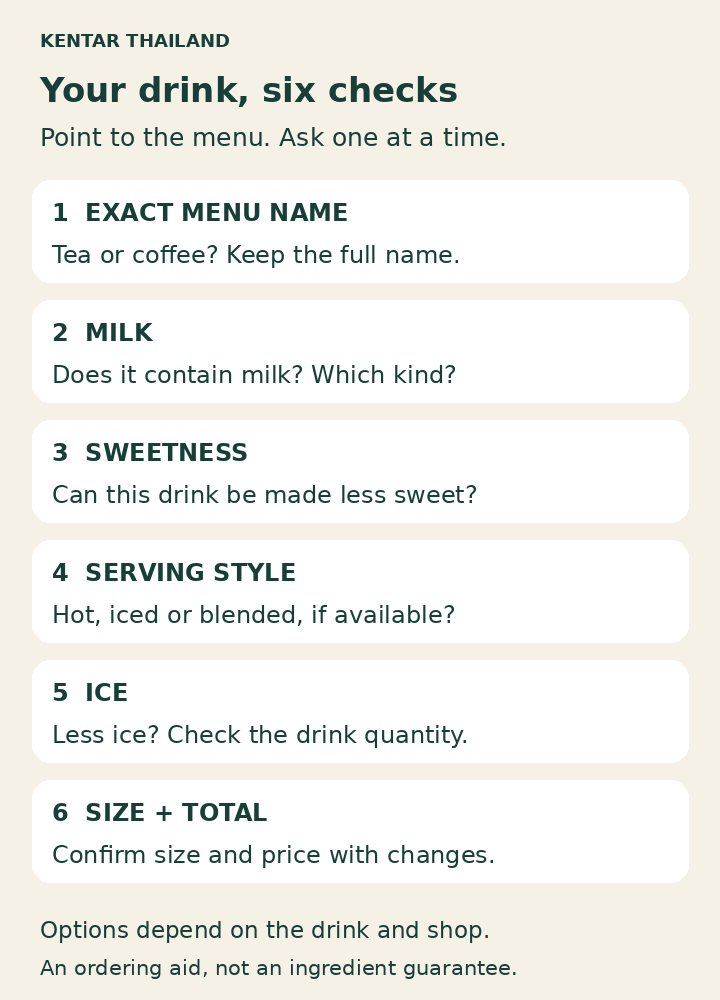
- “This drink, please: (exact menu name).”
- “Does it contain milk? Which kind?”
- “Can you make it less sweet?”
- “I would like (hot / iced / blended), if available.”
- “Can I have less ice? Does that change the amount of drink?”
- “This size, please. What is the total with those changes?”
These are English conversation prompts. They do not guarantee English-speaking staff or that a shop can make every change. Pointing to the printed item and available size keeps the order anchored to something both of you can identify.
Two ways to practise
Want a lemon tea with less sweetness? Find the lemon-tea entry, ask whether sweetness can be changed, then confirm the serving style and size. You do not need to begin with milk tea and negotiate several substitutions.
Want coffee with milk? Select the exact coffee drink, ask what milk it contains, then decide whether you want a sweetness change. Leave the milk question separate from the sweetness request so neither is lost.
For two people, keep each person’s drink and changes together: one menu name, one size and its own preferences. Before leaving the counter, check which cup belongs to which order.
For the Japanese-language companion, see our guide to choosing Thai iced tea. The most useful habit in either language is the same: identify the drink first, and change only the details you actually care about.