Source check: 10 October 2026. Menu examples are specific to the restaurants named below.
A breakfast menu can list both jok and khao tom without explaining why you might choose one over the other. Start with the description beside the name: are you choosing congee, or a rice soup? Then check the protein, egg and toppings before ordering. That gives you a more useful starting point than asking for a generic “Thai breakfast.”
Read the bowl before choosing the toppings
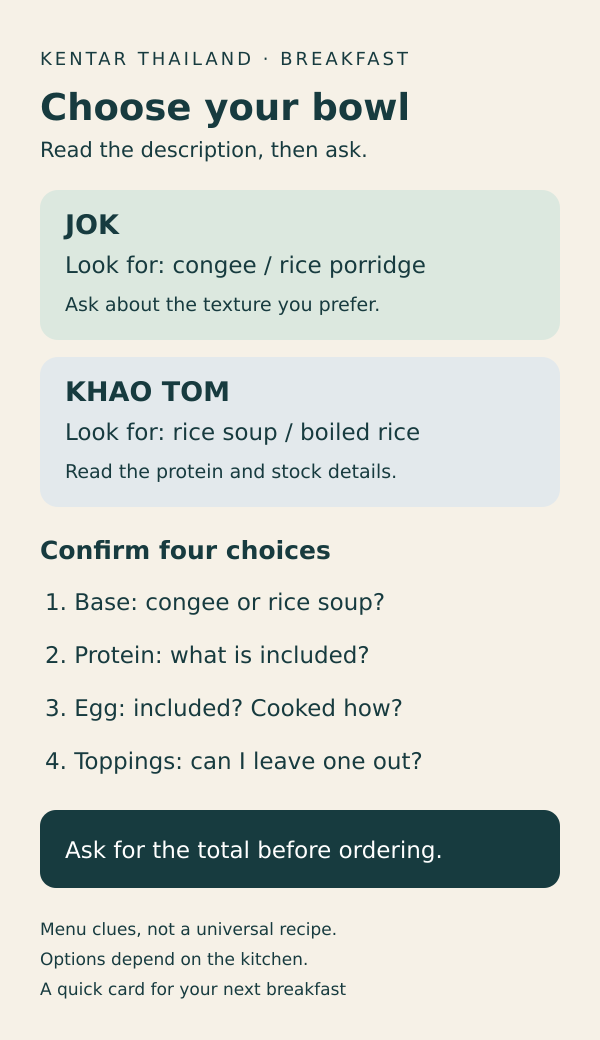
For a first order, look for jok described as congee and khao tom described as rice soup or boiled rice. These are useful menu clues, rather than a promise that every kitchen prepares an identical bowl. If texture matters to you, ask whether the rice is soft and porridge-like or served as grains in broth.
Rosewood Bangkok's current Lakorn breakfast menu, checked on 10 October 2026, makes the distinction concrete. Its jok entry offers vegetarian or pork congee with egg, ginger and spring onions. Its khao tom pla entry lists seabass, boiled rice and Thai celery. Those are two choices at that restaurant, not universal ingredients for either dish. See the current Lakorn menu.
If you like the sound of one bowl but dislike a listed topping, ask before ordering whether it can be left out. A garnish added at the end and an ingredient already cooked into the base are different requests. “Without pork” also leaves the stock unanswered; explain what you need rather than relying on the dish name alone.
Avani+ Riverside Bangkok provides another useful example: its current Breakfast in Bed menu describes Jok Moo Ruam as a silky rice porridge and lists optional condiments separately. That distinction gives you something specific to ask about: which toppings arrive in the bowl, and which seasonings can you add yourself? See the official menu offer.
Make four small decisions
1. Choose the base. Point to the menu entry and say whether you want the congee or rice soup. If the English description is unclear, ask staff to show which bowl matches the texture you prefer.
2. Check the protein. Use the options actually printed on that menu. Ask which comes with the dish and whether another choice changes the price. A fish version on one menu does not mean fish is available everywhere.
3. Ask about the egg. Check whether an egg is included, optional or a separate charge, and tell staff how you want it cooked. Do not assume that an egg shown in a photograph comes with every order.
4. Settle the toppings. Read the ginger, herbs and other additions listed for your bowl. Ask about leaving something out before the kitchen begins preparing it. If you would like seasoning separately, ask whether that is possible.
A short order card
Show the menu while using these English prompts, one at a time:
- “This one, please. Is it congee or rice soup?”
- “Which protein is included?”
- “Does it come with an egg? Can I choose how it is cooked?”
- “Can this topping be left out?”
- “What is the total for this bowl with those choices?”
The card helps organise a conversation; it does not guarantee that staff speak English or that every change is available. Pointing to a printed option is often clearer than presenting a long list of substitutions. If the explanation remains uncertain, choose a dish whose ingredients the kitchen can explain.
Keep the first order simple
Choose one bowl and confirm the options before adding sides. If you are ordering for two people, name each person's bowl separately so the protein and egg choices stay attached to the correct order. At a buffet or breakfast package, first check whether the bowl is included or ordered separately.
Keep any ingredient or preparation requirement explicit. Neither the word congee nor a vegetarian label answers every question about a kitchen's stock, seasoning or preparation.
For a Japanese-language explanation, see our Japanese guide to choosing jok and khao tom.